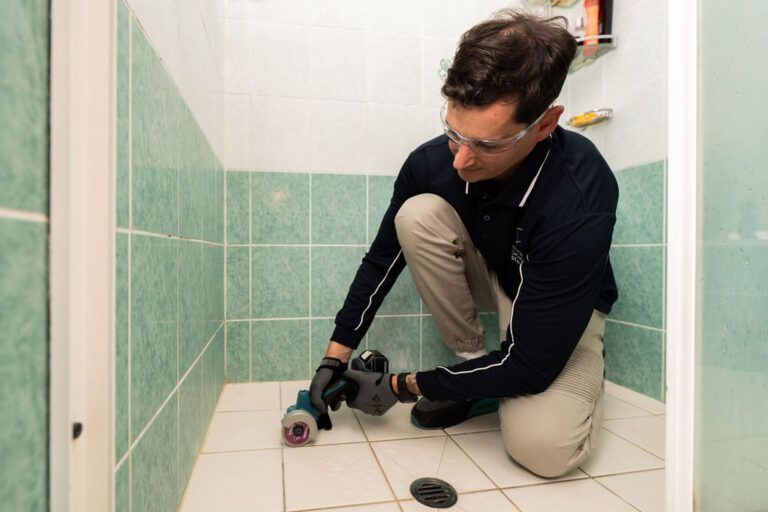

Resealing a balcony is worth doing because the grout and silicone on the surface are what keep rain out of the slab and out of the room underneath. Once that seal cracks or pulls away, water gets in every time it rains. A reseal makes the tiled surface watertight again without lifting a single tile, and most residential balconies are finished in one day.
Below we explain why balcony seals fail, what the water does once it gets past them, the signs to look for, and the one situation where resealing is not the fix. If you already know your balcony needs work, our balcony resealing page covers how we reseal a balcony step by step.
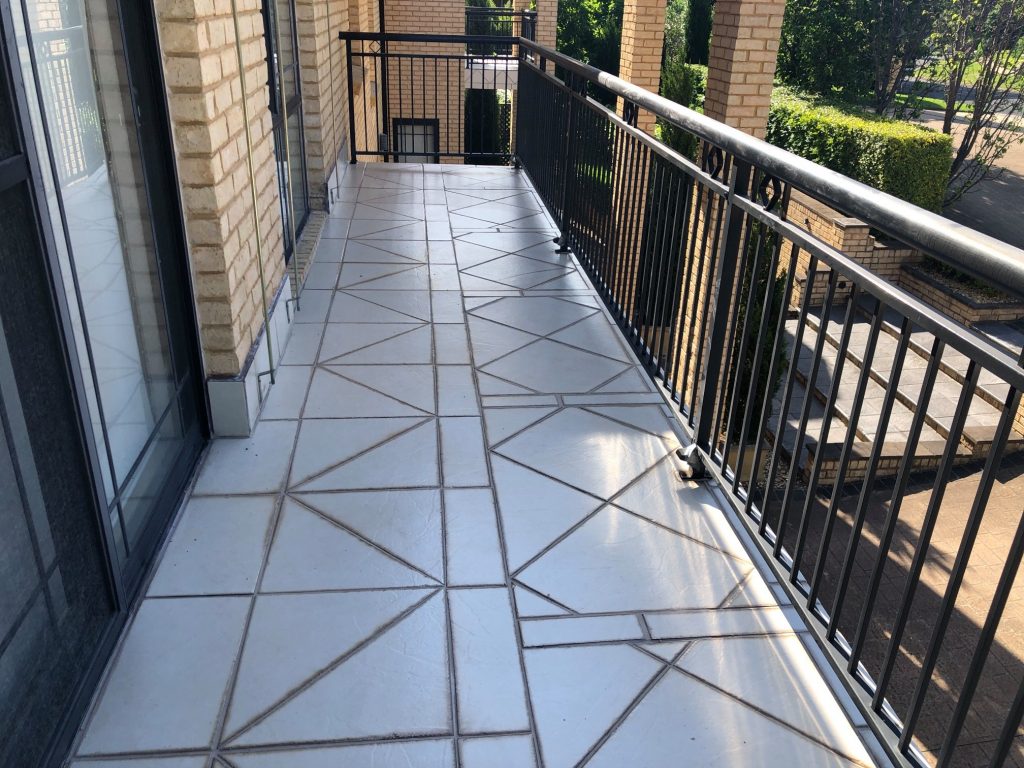
Why Balcony Resealing Is a Great Idea Before the Leak Shows Up
A balcony takes sun, rain and temperature swings every day, and the outdoor slab underneath it is always moving slightly. That movement works on the joints between the tiles and around the edges until the grout cracks and the silicone perishes. Most people notice a balcony problem from underneath before they notice anything on top, usually as a mark on the ceiling of the room below.
Resealing the balcony while the damage is still on the surface is a one day repair. Leaving it until water has soaked into the structure can mean every tile has to come up, the damage underneath has to be repaired, and the surface has to be waterproofed and tiled again. That rebuild is work for a waterproofer and a tiler, and it takes weeks rather than the single day a reseal takes.
Why Balcony Seals Crack and Let Water Through
Most balconies start leaking at the edges rather than in the middle of the floor. The perimeter joints, where the floor meets the wall, the balustrade base and the outside edge of the slab, are where the slab moves the most, so they are usually the first joints to split. The join under and around the door leading onto the balcony is another joint that needs to stay sealed.
The grout itself matters too. Standard cement grout is porous, so it soaks up water and gives mould a place to grow. When we regrout a balcony we use epoxy grout, because it does not absorb water the way cement grout does and it holds up better against mould. You can read how the two compare in our guide to epoxy grout and cement grout.
What Water From a Leaking Balcony Does to Your Home
Water that gets through a failed balcony seal runs down into the ceiling and wall cavities of the room underneath. It does not stop at the paint. Left long enough, it reaches the timber framing and the plasterboard, and the damp conditions it leaves behind let mould take hold in the room below.
Keeping the balcony surface watertight protects everything underneath it, including the waterproofing membrane under the tiles. A sound surface seal stops water from getting through to the membrane, which is why resealing early is the cheaper way to look after a balcony.
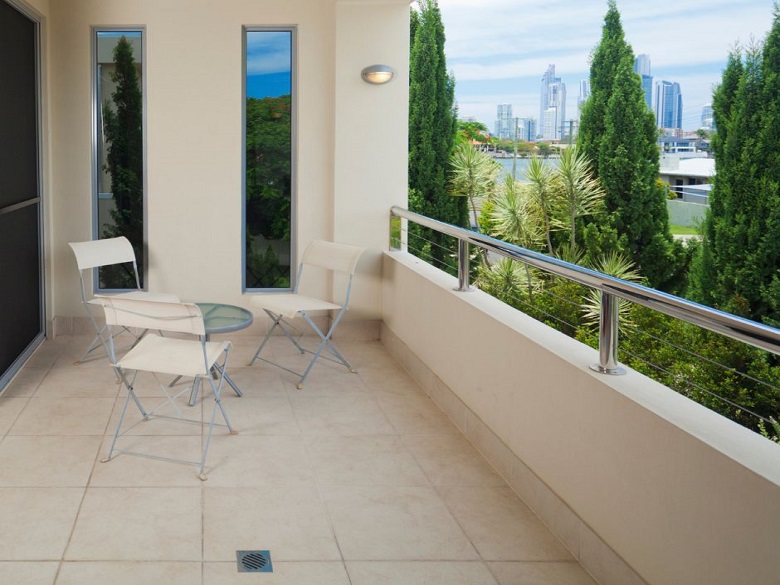
Signs Your Balcony Needs Resealing
You can often spot a failing balcony seal from inside the house before you notice anything on the balcony itself. Look for these signs underneath the balcony:
- Water stains or a tide mark on the ceiling under the balcony
- Paint bubbling, blistering or flaking off the ceiling or the top of an internal wall
- A damp, musty smell in the room below that does not clear
- Rust stains or white chalky deposits on the underside of the slab or on the balcony edge
On the balcony itself, look for these:
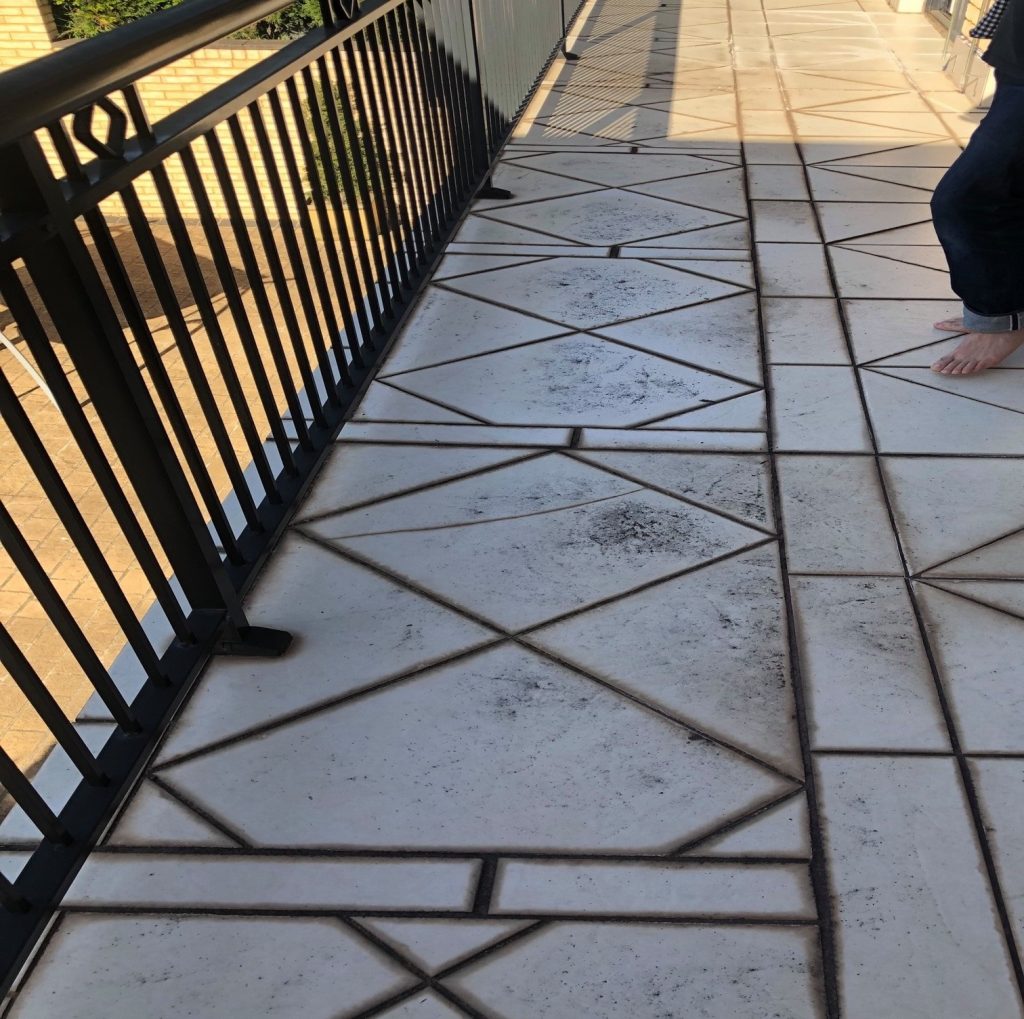
- Cracked, crumbling, discoloured or missing grout between the tiles
- Silicone that has gone black or hard, or is peeling away from the edges
- Tiles that sound hollow or move slightly when you walk on them
- Water pooling on the surface long after the rain has stopped
- Mould growing in the grout lines or along the edges
One of these signs on its own is worth having checked. Two or three together usually mean the surface seal has failed and water has been getting in for some time. Dirty grout on its own is a different problem, and our tile and grout cleaning service covers balcony and outdoor tiles as well as bathrooms.
What Balcony Resealing Involves
Balcony resealing covers more than the grout lines in the middle of the floor. We clean the tiled surface, cut out the old silicone and the failed grout, and regrout the floor joints with epoxy grout. We then reseal the edge joints, the door thresholds and the exterior face of the slab edge, and we finish with a flexible sealer along the balcony edge so that joint can move without splitting again.
Your tiles stay where they are for the whole repair. Most residential balconies take one day, and we tell you at the quote how long to stay off the new grout while it cures. We also reseal shower tiles.
Can You Reseal a Balcony Yourself?
You can buy grout sealers and silicone at any hardware store, but sealer will not fix grout that has already cracked, crumbled or come away, because sealer sits on top of the joint and cannot rebuild it. New silicone also fails quickly if the old silicone is not fully removed and the surface is not clean first.
A professional reseal costs more than a DIY attempt, but the failed grout and silicone come out completely before anything new goes in.
When Resealing Will Not Fix a Leaking Balcony
Resealing fixes a failed surface seal, which is what most leaking balconies have. If the waterproofing membrane under the tiles has broken down instead, the tiles have to come up so the balcony can be waterproofed again, and that work is carried out by a licensed waterproofer and a tiler. We do not remove tiles, so when we inspect your balcony we will explain which problem you have before you spend anything.
Balcony Resealing in the Hills District, North Shore and Western Sydney
We are based at North Richmond and we reseal balconies across the Hills District, the North Shore, Western Sydney and the Hawkesbury. Our balcony work carries a 10 year grout warranty and a 7 year workmanship warranty, in writing. We also regrout and reseal showers, and if your shower is leaking as well, our leaking shower repairs page explains how we fix it without removing tiles.
To book a free onsite quote, call 1300 815 512 or contact us and tell us what you have noticed and where.
Balcony Resealing: Frequently Asked Questions
Do you need to remove tiles to reseal a balcony?
No. Balcony resealing is surface work. We cut out the old silicone and the failed grout, grind out the joints where the grout is too far gone, then regrout and reseal. Every tile stays where it is.
Can a leaking balcony damage the rooms below?
Yes. Water that gets through a failed balcony seal ends up in the ceiling and wall cavities underneath. Left long enough, it reaches the timber framing and the plasterboard, which is why most people first notice the problem on the ceiling of the room below.
How long does balcony resealing take?
Most residential balconies take one day. Larger balconies, or balconies with a lot of failed edge joints and door thresholds, can take longer, and we give you the timeframe with the quote.
What is the difference between balcony resealing and balcony regrouting?
Regrouting replaces the cracked or missing grout between the tiles. Resealing is the full repair: the grout lines plus the silicone and flexible sealer in the edge joints, the perimeter, the tile to wall junctions and the door and window frames.
Andreas Jagle owns Leaking Showers Sealed and has been regrouting and resealing showers and balconies in Sydney since the business was established in 2016. NSW contractor licence 89111C. Ardex Academy accredited. Servicing North Richmond and the Hawkesbury, the Hills District, the North Shore and Western Sydney. Call 1300 815 512.