If your shower silicone is going black, curling at the edges, or letting water past the join, you’re probably asking the same question every Sydney homeowner asks eventually: how long is this supposed to last, and is it normal for it to fail this soon?
There’s no single answer, because a shower seal isn’t one job done once. It’s a maintenance item with a real lifespan, and that lifespan depends heavily on how the shower is used and how well the last reseal was done.
– A properly applied silicone shower seal generally lasts 5 to 10 years before it needs redoing.
– Ventilation, cleaning habits, and water quality all shorten or extend that window.
– Black or curling silicone is a maintenance sign, not automatically a structural leak.
– Resealing is surface work. It does not require removing tiles.

How Long Does a Shower Reseal Actually Last?
Good-quality bathroom silicone typically lasts 5 to 10 years before it needs replacing (Roseal, retrieved 2026-09-02). That range is wide because the honest answer depends on airflow, cleaning routine, and how the original job was prepped.
A bathroom with an exhaust fan that actually gets used, tiles that get a wipe-down after showering, and silicone that was properly prepped (old sealant fully removed, surface degreased, no shortcuts) sits at the long end of that range. A steamy, poorly ventilated ensuite with a lazy cleaning routine can see the same seal start failing well inside five years.
This is also a topic we cover from the other angle in How Long Does Shower Regrouting Actually Last?, since regrouting and resealing are different jobs on the same shower with different failure points.
What Actually Wears a Seal Out Faster?
Silicone doesn’t fail on a fixed calendar. It fails because of specific, repeatable conditions, and most Sydney bathrooms have at least one of them working against the seal every single day.
- Poor ventilation. Steam that has nowhere to go sits on the silicone and the surrounding grout, feeding mould and softening the bond over time.
- Harsh or abrasive cleaners. Bleach-heavy sprays and scouring pads break down silicone’s surface faster than a plain pH-neutral clean.
- Movement in the substrate. Older homes settle. Small amounts of movement stress the seal at joints and corners first.
- A rushed original install. Silicone applied over old sealant, dust, or soap residue never bonds properly, and it shows up as premature failure, sometimes within a year or two.
Read more: Signs Your Shower Is Leaking (And What To Do Next Before It Gets Worse)
Is Black or Curling Silicone Actually a Problem?
Discoloured or curling silicone is a sign the seal has reached the end of its working life, not automatically evidence of a structural leak. It means the barrier is compromised and water can start tracking behind tiles, which is worth acting on before it becomes a bigger job.
Black silicone is usually mould living in the surface, and once it’s embedded it will keep coming back no matter how hard you scrub it. Curling or lifting silicone means the bond has broken and there’s now a gap, even if you can’t see water coming through yet. Either sign is the practical cue to book a reseal rather than wait for a visible leak.
We looked at this exact question from the “is this actually serious” angle in Is A Leaking Shower Really A Big Deal?.
Does Resealing Mean Removing Tiles?
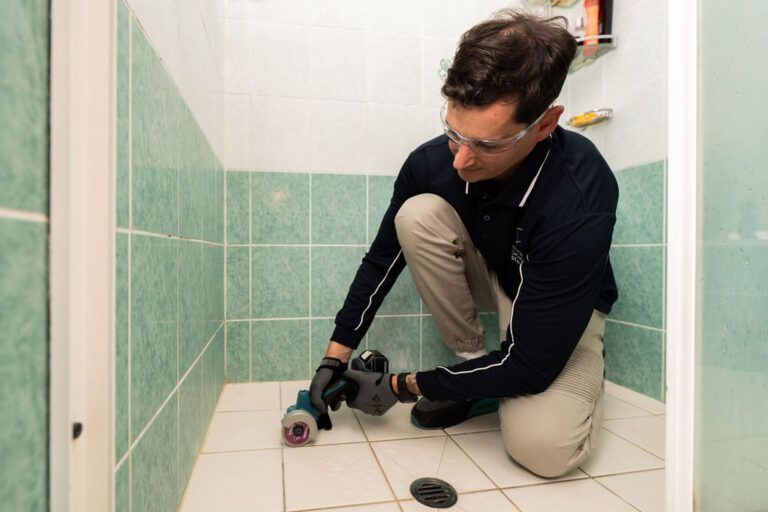
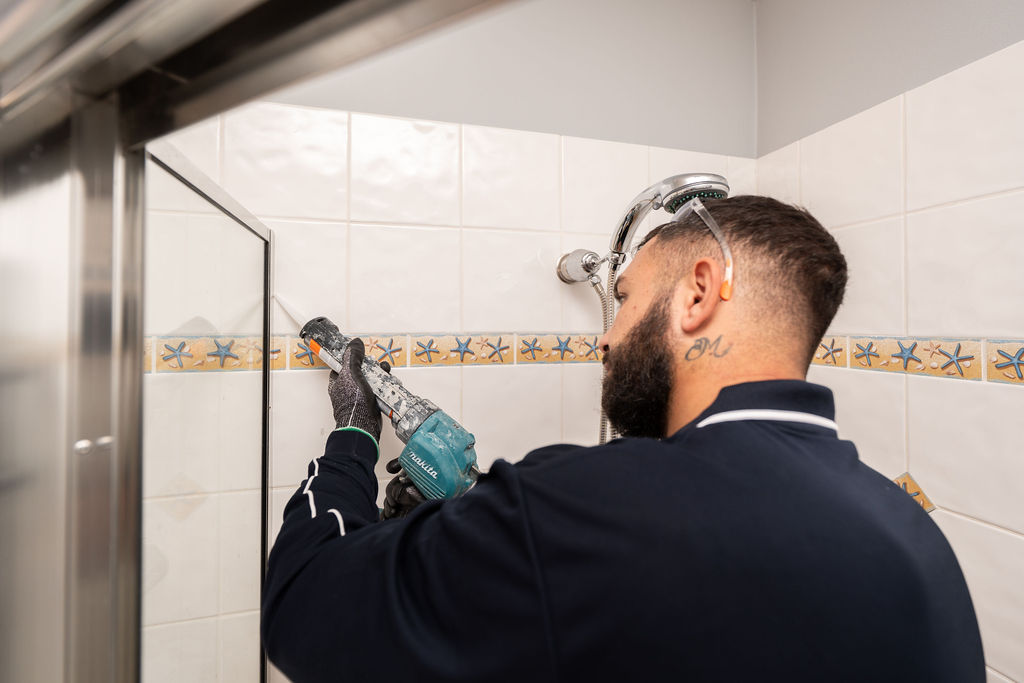
No. Resealing is surface-level work: the old silicone is cut out and removed, the joint is cleaned and prepped, and new silicone is applied. Tiles stay exactly where they are.
That’s the distinction worth understanding before you assume a failing seal means a full bathroom job. A reseal addresses the seal itself. It’s a different scope of work to regrouting (which deals with the grout lines between tiles) and a different scope again to waterproofing membrane work, which sits behind the tiles and isn’t something every trade in this space performs.
Read more: Epoxy Grout vs Cement Grout: An Honest Comparison from a Sydney Regrouter
Balcony and Wet Area Seals: Do They Wear Faster?
Yes, generally. Balconies and other outdoor-exposed wet areas face UV, temperature swings, and weather that indoor showers never see, which shortens the practical life of the same silicone product.
An indoor shower seal is protected from sun and rain. A balcony seal is exposed to both, plus expansion and contraction as temperatures swing across a Sydney day. That’s part of why we treat balcony resealing as its own topic rather than assuming it behaves the same as an internal shower. Why Balcony Resealing Is A Great Idea
When Should You Actually Book a Reseal?
Book a reseal when you notice discolouration that won’t clean off, silicone that’s curling or pulling away from the tile or base, or any sign of water sitting where it shouldn’t after a shower. Waiting past that point risks water tracking further into the substrate.
A reseal booked early is a straightforward, same-day-scale job. Left too long, the same shower can end up needing more extensive work, including grout attention or, in worse cases, a look at what’s happening behind the tiles. If your shower is somewhere in that 5 to 10 year window and starting to show these signs, that’s the moment to get it looked at rather than wait.
Leaking Showers Sealed holds NSW Fair Trading Contractor Licence 89111C and is an Ardex Academy accredited applicator, working across North Richmond, the Hills District, North Shore, and Mosman. If your shower seal is due, book an inspection and we’ll tell you honestly whether it’s a reseal, a regrout, or something else.
Frequently Asked Questions
How often should shower silicone be redone?
Most Sydney bathrooms need resealing every 5 to 10 years, though poor ventilation or harsh cleaning products can shorten that. The honest way to check is to look at the silicone itself rather than go by a fixed number of years.
Can I reseal a shower myself?
It’s possible for a confident DIYer to attempt, but full removal of old silicone and correct surface prep are what determine whether the new seal actually lasts. A rushed DIY reseal often fails again within a year because the old sealant wasn’t fully stripped first.
Is black silicone dangerous?
Black silicone itself isn’t a health emergency, but it does mean mould is established in the seal and the barrier is likely compromised. It’s a sign to book a reseal rather than something to ignore indefinitely.
Does resealing fix a leaking shower?
Resealing fixes leaks caused by a failed silicone joint, which is the most common cause of a “leaking” shower. If the leak is coming from behind the tiles or from plumbing, that’s a different problem and outside what resealing addresses, we’ll tell you honestly if that’s what we find.
How much does shower resealing cost in Sydney?
Pricing depends on the size of the shower and how much of the existing silicone needs to be removed and replaced. get an accurate quote for your specific bathroom rather than rely on a generic figure.
Sources: keyword demand data (Google Search Console, live property data pulled 2026-08-24, 28-day window to 2026-08-21, queries “shower resealing” and “shower sealing”). Silicone sealant lifespan figure: Roseal, “How Long Does Silicone Sealant Last in a Bathroom?”, retrieved 2026-09-02, https://www.roseal.co.uk/how-long-does-silicone-sealant-last-in-a-bathroom/. Licence and accreditation details per Leaking Showers Sealed’s published credentials (NSW Fair Trading Contractor Licence 89111C, verifiable at onegov.nsw.gov.au/publicregister; Ardex Academy Accreditation).