Yes. And the reason it matters is that by the time you can see anything, the water has usually been getting past the seal for months. We get called out across the Hills District, the North Shore and Western Sydney for exactly this, and the damage is nearly always older than the owner thinks.
Here is what is actually going on behind the tiles, and how to work out how far it has gone.
What a leaking shower actually is
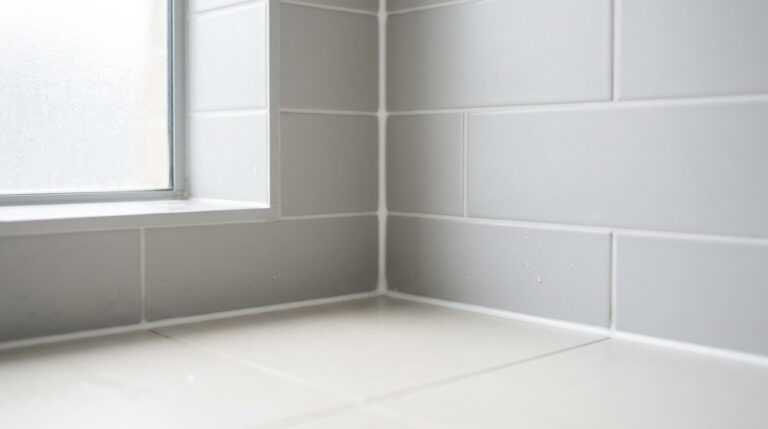
Most people picture a burst pipe. That is usually not what is happening. A tiled shower is meant to stop water twice: once at the surface, by the grout and the silicone, and once behind the tiles, by the waterproof membrane.
When the surface seal goes, water soaks into the grout lines, tracks through the bed underneath and finds its way out into the wall cavity, the subfloor or the room next door. The tiles look perfectly fine the whole time. That is why the first sign is almost never in the shower. It is a damp skirting board in the hallway, or a stain on the ceiling below.
The damage you cannot see yet
Water inside a wall cavity does not dry out. It sits there and works on whatever it can reach.
- Ceilings: the plasterboard under an upstairs shower sags, then stains, then eventually lets go.
- Framing and floor bearers: timber stays damp, softens and rots, and that repair costs many times what the seal did.
- Floors in the next room: carpet smells, and floating floorboards lift and cup along the edges.
- The tiles themselves: as the bed underneath moves, grout cracks and tiles start to sound hollow when you tap them.
None of that is dramatic on day one. That is the problem with it.


Mould is the part people underestimate
A wall cavity that stays wet is close to ideal for mould. NSW Health lists the effects of mould exposure as a runny or blocked nose, irritation of the eyes and skin, and sometimes wheezing, and notes that inhaling mould spores may trigger an asthma attack in people with asthma.
The same page makes the point we end up making on site most weeks: mould is likely to return unless you treat the cause. Scrubbing it off the grout while the leak keeps running just resets the clock.
What about the water bill?
This is where a lot of the advice online gets it wrong. A failed shower seal does not usually show up as a big jump in your bill, because the water is still going down the drain. It is just going into the building on the way past.
A sudden spike with no change in how much you are using points at a pipe or a waste, not at the grout. Different problem, different trade, and worth knowing before you book anyone.
Water and power do not mix
If you can see staining near a downlight below the bathroom, around a light fitting, or at a power point on the far side of the shower wall, stop using the shower and get a licensed electrician out before anything else happens. That is not our trade and it is not a wait and see situation.
Is it the shower, or is it the plumbing?
Worth answering before anyone quotes you, because it decides who you should be calling.
- Usually the surface seal: the leak turns up after someone has showered, and the grout or silicone in the corners is cracked, missing, dark or crumbly.
- More likely plumbing: water is there when nobody has used the shower, or it is worse with the tap running and nobody standing in the recess. That is a pipe or a waste, and you want a licensed plumber. We are not plumbers and we will say so.
- A waterproofing job: the membrane behind the tiles has failed. Waterproofing of domestic wet areas sits under AS 3740, it is a separate licensed trade, and it means the tiles come up. We do not do that work either.
We would rather point you at the right trade than sell you a regrout that was never going to fix it.
Making it watertight again without removing tiles
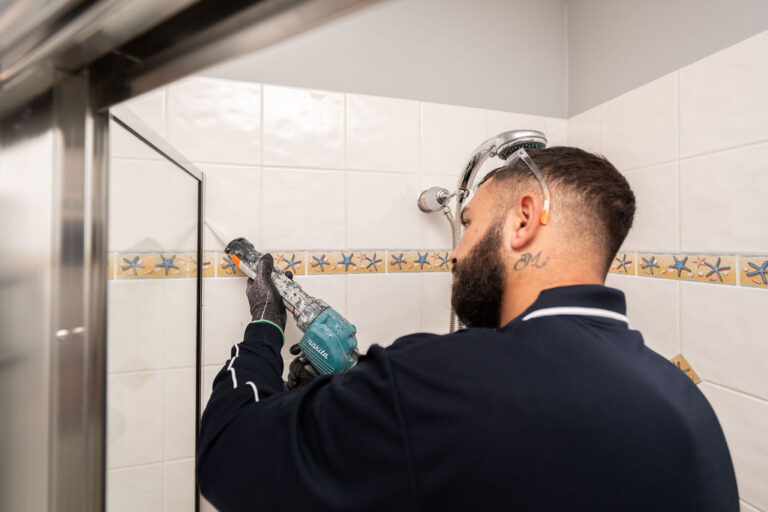
Most of the leaking showers we see in Sydney do not need the bathroom pulled apart. If the membrane underneath is still sound and the failure is at the surface, we regrout and reseal.
- Rake out: the old grout comes out of the tile joints and the perished silicone is cut out of the corners and the floor to wall junction.
- Refill: the joints are cleaned back and filled with new grout.
- Reseal the moving joints: the internal corners and junctions get a flexible sealant rather than grout, because those joints move, and that is where showers fail first.
- Cure: the shower is left alone before it goes back into service.
The tiles stay where they are. No demolition, no skip bin out the front, no bathroom out of action for a fortnight.

So how long have you got?
Honestly? Once there is a stain on a ceiling or a soft skirting board, the seal has been gone a while. A regrout and reseal will still stop the water at that point, but you may have a plasterer or a chippy to organise as well for the damage already done.
Caught earlier, when the corner silicone is just starting to darken and split, it is a straightforward job. If you are not sure which of those you are looking at, send us a photo. Costs nothing to ask, and we will tell you straight.
Common questions
Can I just regrout it myself?
You can, and for a single cracked joint on a wall it is worth a go. The bit most DIY jobs miss is the floor to wall junction and the internal corners. Those need a flexible sealant, not grout, because they move every time the frame does. Grout in a moving joint cracks again inside a few months.
Will new silicone on its own fix it?
Sometimes, if the grout is genuinely sound and only the silicone has perished. More often the silicone is just the visible symptom and the grout lines have gone porous as well, in which case fresh silicone buys you a few months.
How do I know if the waterproofing behind the tiles has failed?
The usual signs are tiles sounding hollow when tapped, movement underfoot, or a leak that carries on after a proper regrout and reseal. If that is what you have, the membrane is the problem and it needs a licensed waterproofer, which is a different job to ours.
How long is the shower out of action?
Most residential showers are a one day job, then curing time before anyone uses it. We will give you the actual window once we have looked at it.
We are about to sell. Is it worth doing first?
A leaking shower that has got into the structure is the sort of thing a building inspection picks up, and it is a lot easier to deal with before the property is on the market than during a negotiation.
Get someone to look at it
If your shower is leaking, or you have a stain you cannot explain, book an onsite look and we will tell you whether it is a regrout and reseal, or whether you need a plumber or a waterproofer instead. Every job is quoted onsite, because shower size, tile condition and how far the grout has gone all change the work. You can also read more about leaking shower repairs or shower regrouting.
Book an appointment and we will work out what your shower actually needs. We cover three areas across Sydney: Western Sydney, The Hills District and The North Shore.
Andreas Jagle runs Leaking Showers Sealed and has been regrouting and resealing showers around Sydney since the business was established in 2016. NSW Fair Trading Contractor Licence 89111C, verifiable on the NSW public register. Ardex Academy accredited. Servicing the Hills District, the North Shore and Western Sydney. 1300 815 512.