
Regrouting a Shower to Fix Leaks: When a Regrout Stops the Leak and What to Expect from Leaking Showers Sealed
You’ve noticed water on the bathroom floor outside the shower. The grout lines look cracked or stained, and there’s a musty smell that cleaning doesn’t shift. Perhaps the paint on the other side of the wall has started to bubble, or the timber door frame near the shower has swollen.
It’s easy to assume a pipe has burst behind the wall. In many showers, though, the water is getting out through cracked grout and perished silicone. A regrout and reseal can stop that kind of leak without removing a single tile.
This guide explains when regrouting a shower will fix a leak, when it won’t, what happens during a regrout with Leaking Showers Sealed, and how long you’ll need to stay out of the shower afterwards. If you already know the grout is the problem, our shower regrouting page covers how we regrout showers across North Richmond, the Hills District and the North Shore.
Will Regrouting Stop My Shower Leaking?
- Regrouting stops a leak when the water is escaping through cracked grout or failed silicone.
- We cut the old grout out and replace it with Ardex EG15 epoxy grout, which is non-porous, and we reseal the corners and junctions with Ardex neutral cure silicone.
- The tiles stay in place, so you can stop a leaking shower without removing tiles or renovating.
- A leaking pipe, drain or tap needs a plumber, and a failed membrane under the tiles means lifting the tiles, so a regrout won’t fix either problem.
- You’ll need to allow at least 24 hours before using the shower again.
Contact Leaking Showers Sealed if you’ve noticed mouldy grout, a damp smell or water escaping around your shower.

What Is Shower Regrouting?
Shower regrouting means removing the old, cracked or mouldy grout from between your shower tiles and replacing the grout with new grout that seals the joints again. At Leaking Showers Sealed we use Ardex EG15 epoxy grout. It’s non-porous, so water and mould can’t soak into it the way they soak into old cement grout.
Grout wears down over years of hot water, cleaning products and small movements in the building. Cracks and pinholes in the grout open up, and water can then pass through the joints even when the tiles themselves look fine. You might not see any damage at first, because the water ends up behind the tiles and under the shower floor.
A regrout closes those joints again, so the shower is watertight. It also removes the stained grout lines that make a clean bathroom look tired, without the cost and disruption of a renovation.
Does Regrouting a Shower Fix Leaks?
Regrouting a shower fixes a leak when the water is getting out through failed grout or silicone, which is where many shower leaks start. It won’t fix a leak that starts somewhere else, so the first step is working out where the water is coming from.
When a Regrout and Reseal Is the Right Fix
A regrout and reseal is the right fix when the grout is cracked, crumbling, missing or full of mould that comes back after cleaning. It’s also the right fix when the silicone in the corners and around the shower base has split or come away. In these showers the tiles are sound, and the water is escaping through the joints between them.
When You Need a Plumber Instead of a Regrout
If the leak comes from a pipe in the wall, the shower drain or a tap, regrouting won’t stop it. We work with plumbers, and if the inspection shows a pipe, drain or tap problem, we’ll explain what we found and refer you to a plumber.
When the Waterproofing Membrane Under the Tiles Has Failed
A waterproofing membrane sits behind the tiles and under the shower floor. If water has been getting through the grout for a long time, the membrane underneath can fail too. Replacing a membrane means taking the tiles up, which is renovation work and not something we do.
Andreas holds NSW licence 89111C, which covers waterproofing, so our team knows how to recognise a failed membrane. If we think your shower needs more than a regrout, we’ll explain this before any work starts.
Regrouting early is how you protect the membrane. Fresh epoxy grout and new silicone keep water away from it, which is why it pays to deal with cracked grout before the damage spreads.
How to Tell If Your Shower Needs Regrouting
These are the most common signs your shower is leaking through the grout and silicone:
- Cracked, loose or missing grout between the tiles
- Mould that returns quickly after cleaning
- Damp smells or moisture damage near the shower
- Water pooling outside the shower or leaking into nearby rooms
- Bubbling paint, stained walls or soft floorboards
- Tiles that feel loose or sound hollow when tapped
If any of these sound familiar, the grout and silicone are probably no longer keeping the water in the shower. Tiles that sound hollow when you tap them, known as drummy tiles, may need to be refixed before the shower is resealed, and we check for them during the inspection.

What Happens When Leaking Showers Sealed Regrouts Your Shower?
Regrouting a shower with Leaking Showers Sealed follows the same five steps, and your tiles stay where they are.
Step 1: Inspecting the Shower and Finding the Leak
We look at the grout, the silicone, the tiles and the areas around the shower to work out where the water is getting out. If the inspection points to a pipe, drain or tap, we’ll explain that before any regrouting is booked.
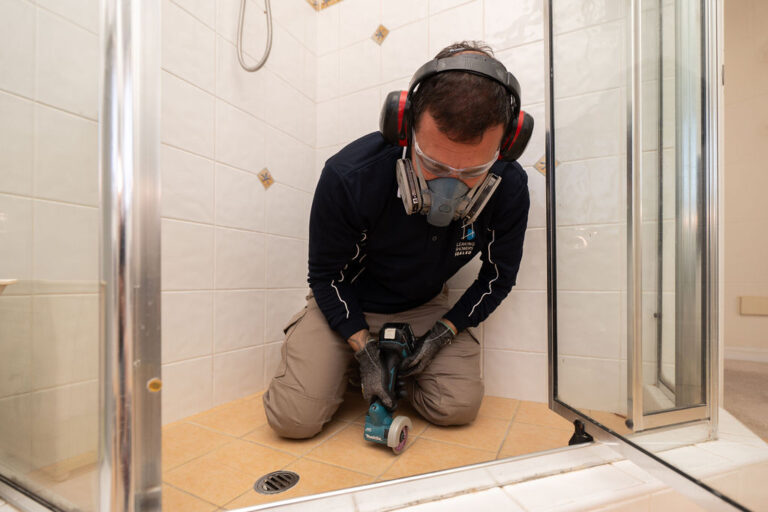
Step 2: Removing the Old Grout and Silicone
We cut out the old grout and strip all of the old silicone, including any silicone that has been laid over older silicone. New grout doesn’t bond properly over old grout, so nothing is covered over.
Step 3: Cleaning the Tiles and the Empty Joints
We clean the tiles and the empty joints to remove soap scum, dust and mould, so the new grout bonds to a clean surface.
Step 4: Regrouting the Shower with Epoxy Grout
We fill the joints with Ardex EG15 epoxy grout. For a shower base seal, we regrout the shower floor, the floor-to-wall junction and the perimeter. For a full shower seal, we also regrout every wall grout line.
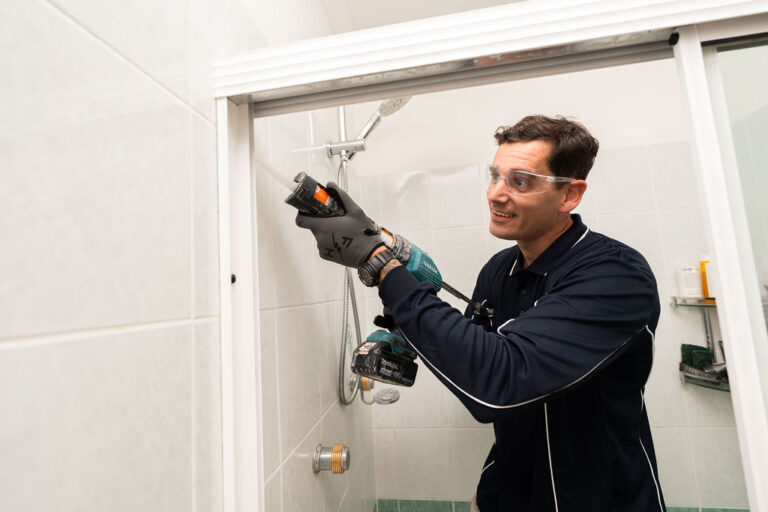
Step 5: Resealing the Corners, Junctions and Tap Flanges
We reseal the internal corners and junctions with Ardex ST neutral cure silicone. On a full shower seal, we seal the tap flanges as well.
A shower base seal takes around 3 to 4 hours on site, and a full shower seal for the walls and floor takes around 4 to 5 hours. You’ll need to allow at least 24 hours before using the shower again, so the grout and silicone can cure properly.
Will Regrouting Get Rid of Shower Mould?
Regrouting gets rid of mould that has grown into the grout, because the mouldy grout is cut out and replaced. Bleach and mould sprays only clean the surface, and the mould comes back because it lives in the grout where water is trapped behind it. You can read more about why shower grout gets stained and damaged in our guide.
Can Regrouting a Shower Save You From a Bathroom Renovation?
For many homeowners, regrouting is a way to avoid or put off a full bathroom renovation. If the tiles are sound and the leak is coming through the grout and silicone, a regrout and reseal makes the shower watertight again. It also gives you a couple more years to save up for a renovation.
A regrout, reseal and deep clean is also a practical bathroom refresh before a home goes on the market, or for landlords between tenants. Our post on regrouting a shower as a budget renovation explains how much a regrout can change the look of a bathroom.
Can You Regrout a Shower Yourself?
DIY grout kits are sold at hardware stores, but regrouting a shower properly is harder than it looks. Without the right tools and experience, you risk:
- Chipping or cracking tiles while removing the old grout
- Leaving old grout in the joints, so the new grout doesn’t bond
- Missing the silicone joints, where many leaks start
- Covering up a leak that comes from a pipe or a failed membrane
If you’re not sure where the water is coming from, it’s worth having the shower inspected before you buy a kit.
How Much Does Shower Regrouting Cost?
The cost of regrouting a shower depends on:
- Tile size, because small mosaics and 100mm tiles have more grout lines than 300mm or 600mm tiles
- The size and layout of the shower, including double showers, niches and extra corners
- The condition of the grout and silicone, such as heavy mould, silicone laid over old silicone or an earlier repair that has to be stripped out
- Drummy or loose tiles that need refixing before the shower is resealed
Regrouting costs far less than a full bathroom renovation or retiling. Our post on shower regrouting cost compared with a bathroom renovation sets out the prices. For a starting price, send photos of the shower floor, the walls and the whole shower to sales@leakingshowerssealed.com.au, or call 1300 815 512.
Frequently Asked Questions About Regrouting a Shower
How long does it take to regrout a shower?
A shower base seal takes around 3 to 4 hours on site, and a full shower seal for the walls and floor takes around 4 to 5 hours. Allow at least 24 hours before using the shower again.
Will regrouting stop a leak?
Yes, if the water is getting out through failed grout or silicone. Regrouting won’t stop a leak from a pipe, drain or tap, which needs a plumber, or from a failed membrane, which means lifting the tiles.
How often should you regrout a shower?
It depends on the grout used, how well the bathroom is ventilated and how the shower is cleaned. Cracked grout, mould that keeps coming back and a damp smell are the signs that a regrout is due. Our post on how long shower regrouting lasts explains what affects it.
Can you grout over old grout?
No. New grout laid over old grout doesn’t bond properly and leaves the leak in place. All of the old grout has to be removed before the shower is regrouted.
Is a regrout covered by a warranty?
Yes. A regrout and reseal comes with a 10-year Ardex product warranty and a 7-year Leaking Showers Sealed workmanship warranty, subject to a site assessment.
Why Choose Leaking Showers Sealed?
- We have specialised in regrouting and resealing showers without removing tiles since 2016.
- We use Ardex EG15 epoxy grout and Ardex ST neutral cure silicone.
- Every regrout and reseal comes with a 10-year Ardex product warranty and a 7-year workmanship warranty, subject to site assessment.
- We have 300+ Google reviews across our three locations.
- We regrout and reseal showers across North Richmond, the Hills District and the North Shore of Sydney.
If your shower is leaking, don’t wait for the damage behind the tiles to spread. Send us photos of the shower or contact us to book an inspection, and we’ll explain whether a regrout and reseal will stop the leak.