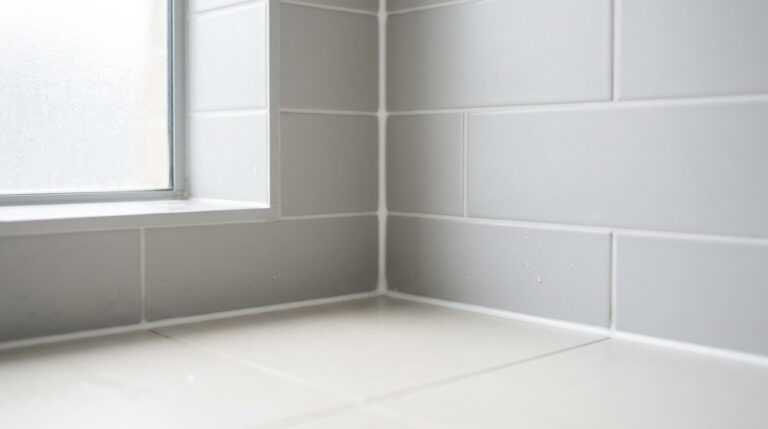
Shower grout doesn’t last forever. If yours is cracking, going dark, or crumbling when you run your finger over it, you’re not imagining things. It’s on its way out.
The good news? Regrouting a shower is one of the most straightforward fixes going. No ripping out tiles. No gutting the bathroom. Just removing the old grout and putting in new.
Here’s what you need to know about how long it lasts and what affects it.
What Is Shower Regrouting?
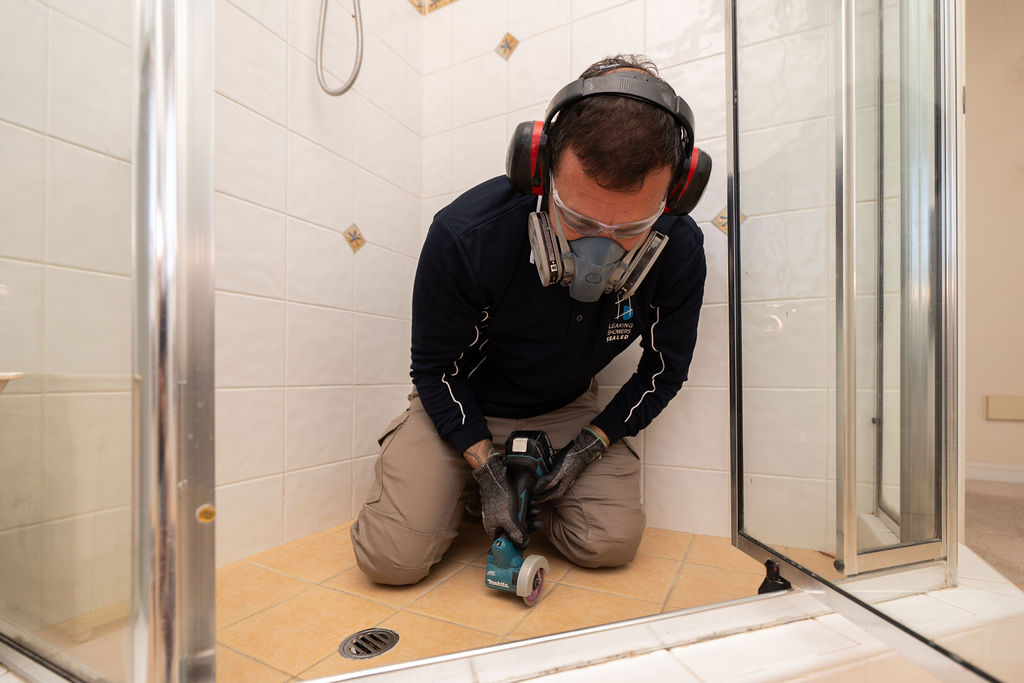
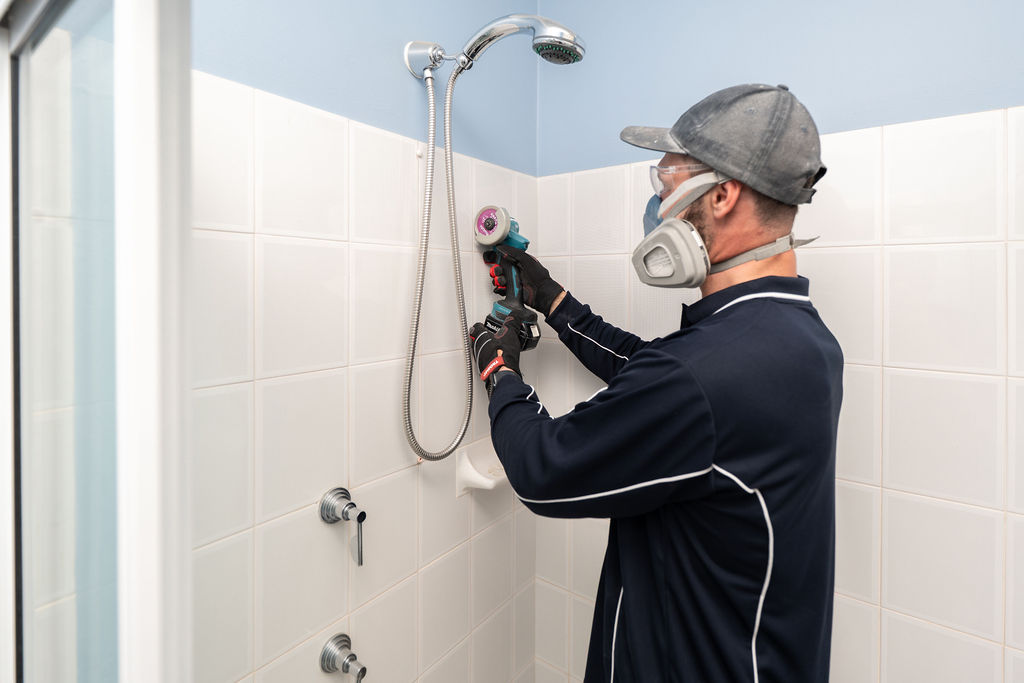
Regrouting is exactly what it sounds like. The old grout between your tiles gets scraped out and replaced with fresh grout.
Over time, grout breaks down. Water gets into it, it cracks, it goes mouldy, and eventually it stops doing its job, which is keeping water where it belongs (in the shower, not behind your tiles).
A proper regrout means removing the old stuff completely, cleaning the joints, and applying new grout that bonds properly. Done right, it seals everything back up without touching the tiles themselves.
It’s not a renovation. It’s maintenance. And it’s a lot cheaper than ignoring it.
So How Long Does Regrouting Last?
Here’s the honest answer: a quality regrout done properly should last 8 to 15 years.
That’s a big range, and it depends on a few things (we’ll get to those). But if someone tells you regrouting lasts forever, they’re not being straight with you. Nothing in a wet area lasts forever. Grout is exposed to water, heat, cleaning chemicals, and daily wear. It’s going to break down eventually.
The key word is properly. A rushed job with cheap grout might start showing issues within a couple of years. A thorough regrout using quality materials? You’ll get well over a decade out of it in most cases.
What Affects How Long Your Regrout Lasts
Not all regrouts are created equal. Here’s what makes the difference between one that holds up and one that doesn’t.
Quality of the Grout
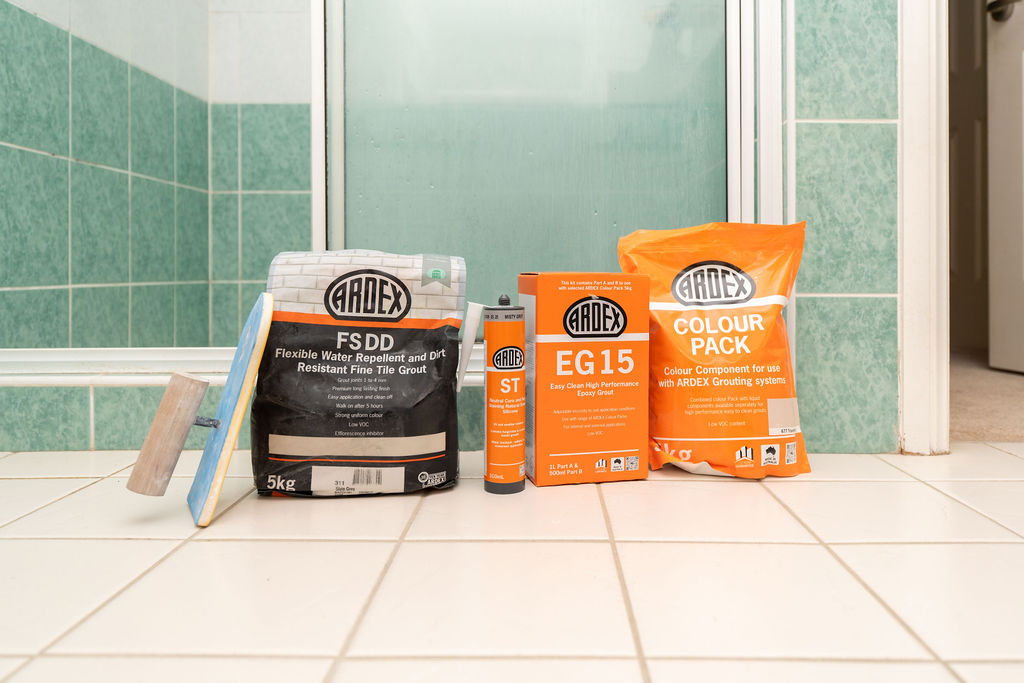
There are different grades of grout. The cheap stuff from a hardware store isn’t the same as what a professional uses. Higher-quality grout is more flexible, more water-resistant, and holds up better over time. Epoxy-based grouts last longer than standard cement grout, but they also cost more and need to be applied correctly.
How Often the Shower Gets Used
A shower that gets used twice a day by a family of five is going to wear grout down faster than a guest bathroom that gets used once a month. More water exposure means more wear. That’s just physics.
Ventilation
This is a big one that most people don’t think about. If your bathroom has poor ventilation, no exhaust fan, no window, or a fan that doesn’t actually extract properly, moisture sits on your grout for longer after every shower. That speeds up breakdown and encourages mould growth, which eats into the grout over time.
If your grout keeps going mouldy no matter how much you clean it, the ventilation is probably the underlying issue.
Water Pressure
High water pressure can push water into tiny gaps and hairline cracks that normal pressure wouldn’t reach. If your water pressure is particularly high, it puts more stress on grout joints over time.
Cleaning Products
Harsh chemical cleaners can actually damage grout. Bleach-based products strip the surface, and acidic cleaners can erode it. If you’re hitting your grout with heavy chemicals every week, you’re shortening its life. A mild bathroom cleaner and a soft brush does the job without the damage.
How Well the Original Job Was Done
This is the biggest factor. If the old grout wasn’t fully removed before regrouting, the new grout doesn’t bond properly. If the joints weren’t cleaned and dried before application, same problem. A professional regrout takes time because the prep matters as much as the grout itself.
Signs Your Regrouting Needs Redoing
You don’t need to guess. Here’s what to look for:
- Cracking or crumbling grout: if pieces are falling out when you touch them, it’s done
- Grout that’s gone dark or discoloured and won’t come clean no matter what you use
- Mould growing in the grout lines that keeps coming back after cleaning
- Gaps between the tiles where grout has pulled away or shrunk
- Water getting behind tiles: if tiles feel loose or you notice damp patches on the other side of the wall, water is getting through
- A musty smell in the bathroom that won’t go away, that’s moisture trapped where it shouldn’t be
If you’re seeing one or two of these, a regrout will likely sort it out. If you’re seeing all of them, it’s worth getting someone to have a proper look at what’s going on behind the tiles.
Regrouting vs Resealing, What’s the Difference?
People mix these up all the time, and they’re not the same thing.
Regrouting is replacing the grout between tiles. That’s the hard filler in the joints between each tile.
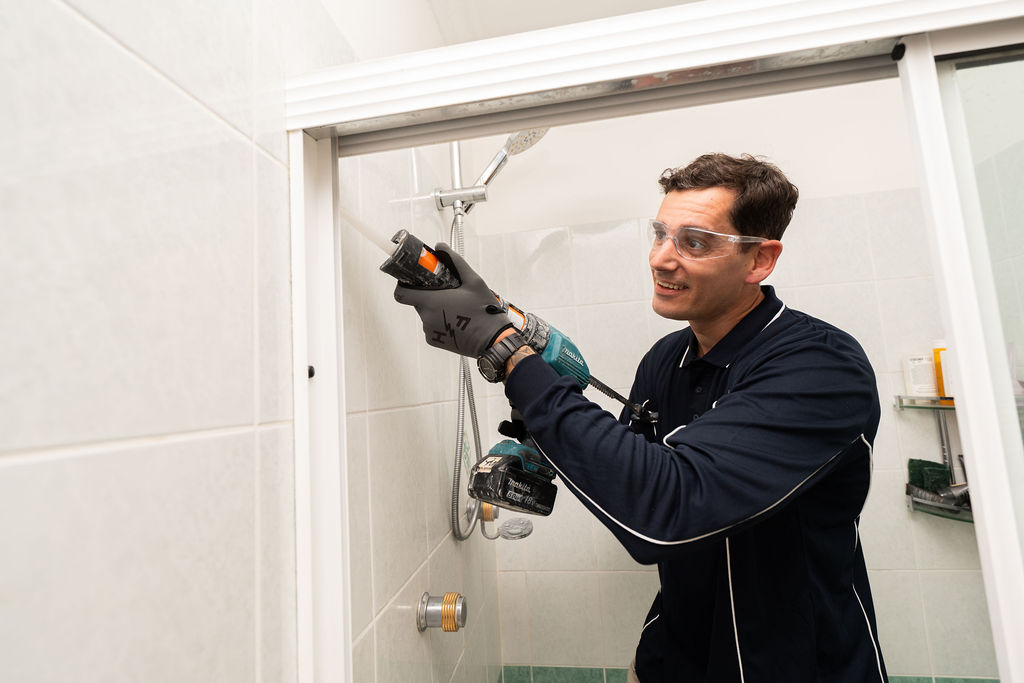
Resealing is replacing the silicone sealant, the flexible stuff you see where the shower tray meets the wall, where tiles meet the bath, or around fixtures. Silicone is designed to flex with movement. Grout isn’t.
Both can fail, and both let water in when they do. A lot of the time, a leaking shower needs both done, new grout in the tile joints and new silicone in the movement joints. They work together.
If someone only regrouts but leaves cracked silicone in place (or the other way around), you’ve still got a water entry point.
When Regrouting Isn’t Enough
Here’s where it gets real. Sometimes the problem isn’t just the grout.
If water has been getting behind tiles for a long time. months or years, it may have reached the waterproofing membrane underneath. That membrane is what actually stops water from getting into the wall cavity and the structure of your home.
If the membrane has failed, regrouting alone won’t fix it. Water will keep getting through even with brand new grout on top.
The signs of a membrane issue:
- Persistent dampness on the wall outside the shower
- Swelling or bubbling paint in the room next to the bathroom
- Tiles that have come loose or sound hollow when you tap them
- Water appearing on the floor below (if the shower is upstairs)
The point is: get it looked at early. A regrout now, from $1,400 inc GST for a full shower seal (walls and floor), with most jobs landing between $900 and $1,500, is a lot better than a much bigger waterproofing job later because water’s been sitting behind your tiles for another two years.
The Bottom Line
A well-done regrout lasts years. It’s one of the most cost-effective ways to fix a leaking or ageing shower without pulling the whole thing apart.
But it’s not a set-and-forget thing. Keep an eye on it, keep your bathroom ventilated, go easy on the harsh chemicals, and deal with cracks early when they appear.
If you’re not sure whether your shower needs a regrout, a reseal, or something more, get someone to look at it. A quick inspection tells you exactly where you stand and what it’ll cost to sort out.
Regrouting FAQ
How much does shower regrouting cost in Sydney?
It depends on the size of the shower and the condition of the existing grout. As a guide, expect from $900 inc GST for a shower base seal, with most jobs landing between $900 and $1,500. If there’s silicone work or additional repairs needed, it’ll be more. Call for a straight answer on your specific shower.
Can I regrout my shower myself?
You can buy grout from a hardware store and give it a go. The issue is that DIY regrouts often fail early because the old grout wasn’t fully removed, the joints weren’t properly cleaned, or the wrong type of grout was used. If your shower is leaking, a failed DIY attempt means water keeps getting through while you think the problem is fixed.
How long do I have to wait to use the shower after regrouting?
Typically 24 to 48 hours. Grout needs time to cure before it’s exposed to water. Rushing it and showering too early is one of the quickest ways to ruin a fresh regrout.
Does regrouting fix a leaking shower?
If the leak is caused by failed grout, yes. Regrouting removes the entry point for water. But if the waterproofing membrane behind the tiles has also failed, regrouting alone won’t stop the leak completely. That’s why it’s worth getting a proper assessment rather than guessing.
Is regrouting the same as retiling?
No. Regrouting replaces the grout between existing tiles. The tiles stay exactly where they are. Retiling means pulling tiles off and replacing them, which is a much bigger and more expensive job. Most of the time, the tiles are fine, it’s just the grout that’s given up.
How do I know if my shower needs regrouting or waterproofing?
If the grout is cracked or missing and you’re noticing water where it shouldn’t be, start with a professional inspection. They can tell you whether it’s a grout issue, a silicone issue, a membrane issue, or a combination. That way you fix the right problem the first time instead of paying twice.