When a shower is leaking behind the wall, the water is usually getting in through the grout and silicone on the surface of the shower and then tracking behind the tiles. The joint where the wall tiles meet the floor, the internal corners and the joints in a tiled recess are where we find it most often, and a regrout and reseal fixes that with every tile left in place. Less often the water is coming from a pipe inside the wall, which needs a plumber, or from a failed waterproofing membrane behind the tiles, which means the tiles have to come up.
Here’s how to work out which one you have, and who fixes each cause.
Key Takeaways
- The usual cause: water gets in through the grout and silicone and tracks behind the tiles, most often at the wall to floor joint, the internal corners and tiled recesses.
- Where it shows: the damp usually turns up outside the shower as bubbling paint, a swollen skirting board or door frame, a musty smell or a stain on the ceiling below, often some distance from where the water gets in.
- A simple check: leave the shower off for a few days and photograph the damp patch each day; if it keeps growing while the shower is dry, it points to a pipe in the wall.
- Who fixes it: failed grout and silicone need a regrout and reseal, a leaking pipe, drain or tap needs a plumber, a failed membrane needs a licensed waterproofer and tiler, and a leaking screen frame needs a glazier.
- Time and warranty: a full shower seal takes around 4 to 5 hours, and the work comes with a 10 year Ardex product warranty and a 7 year workmanship warranty.
Where a leak behind the shower wall usually comes from
The damp patch you can see is often some distance from where the water gets in. Water that gets past a cracked grout line or a lifting bead of silicone runs down and along behind the tiles before it shows, so the joint to look at isn’t always the one closest to the stain.
These are the joints that let water in behind a shower wall most often:
- The wall to floor junction: it takes more water and more building movement than any other joint, and it gets scrubbed the hardest, so it’s where showers fail most often.
- The internal corners: corner joints move as the building settles, which cracks the silicone where two tiled walls meet.
- Around the taps, mixer and shower head: when the seal around a fitting fails, water tracks in behind it and into the wall.
- Where the wall tiles meet the shower screen: screen joints flex with use, and the silicone slowly pulls away.
- The grout lines across the wall and in a tiled recess: grout is porous, and once it cracks, crumbles or goes soft, water soaks through it.
How to tell if your shower is leaking behind the wall
You usually can’t see a leak behind the wall from inside the shower, so look at the room around it and the room on the other side: paint bubbling or peeling, a skirting board or door frame that has swollen, a musty smell that doesn’t clear, or a stain on the ceiling below. We’ve written up the full list of warning signs in signs your shower is leaking and what to do next.
Once you’ve found the damp, where it sits and when it shows up will usually point to the cause:
- Damp at skirting level just outside the shower: this is common when the seal at the wall to floor junction has gone.
- Damp that shows up after someone has showered and dries out in between: this often means the grout or silicone, especially if the corners look cracked, dark or crumbly. A leak at the waste can show the same pattern, because it also usually only shows while water is going down the drain.
- A damp patch that keeps growing when nobody has used the shower for a few days: this points to a water pipe in the wall, and a licensed plumber is the right person to find it.
- Damp that keeps spreading after the grout and silicone have been properly redone, once a pipe has been ruled out: this usually means the membrane behind the tiles has failed.
A simple shower leak test you can do before calling anyone
You don’t need to cut into the wall to narrow down a leak. These checks take a few days and cost nothing.
- Take a photo of the damp patch so you can tell later whether it has grown.
- Leave the shower off for a few days if you have another one to use, and photograph the mark each day. If it keeps growing while the shower is dry, that points to a pipe, so call a plumber before anyone works on the shower.
- If the mark stays the same or dries out while the shower is off, look closely at the joints listed above. Cracked, missing or crumbly grout, and silicone that has gone black, lifted or pulled away, show you where the water is getting in. A mark that only shows after the shower has run can still be the grout, the silicone or the waste.
- Send us your photos of the damp patch and the shower so we can tell you what we can see.
If you still can’t tell whether it’s the grout or the plumbing, we can refer a plumber we trust to do a dye or pressure test, which can help tell them apart, or we can come out and inspect the shower ourselves.
When the shower is leaking into the ceiling or the room below
If the bathroom is upstairs, the first sign of a leak is often a stain, bubbling paint or a sag in the ceiling of the room underneath. Like a damp wall, a ceiling stain is rarely right under the leaking joint, and it can be fed by a grout line a couple of metres away.
The same checks work for a ceiling, so use the dry shower test above before anything else. If the water is getting through the shower floor, we’ve covered that in our post on regrouting and resealing a shower floor.
If you can see staining near a downlight, a light fitting or a power point, stop using the shower and get a licensed electrician out first. The shower can be booked in once the electrics are safe.
Who fixes a leak behind the shower wall
Failed grout and silicone: a regrout and reseal
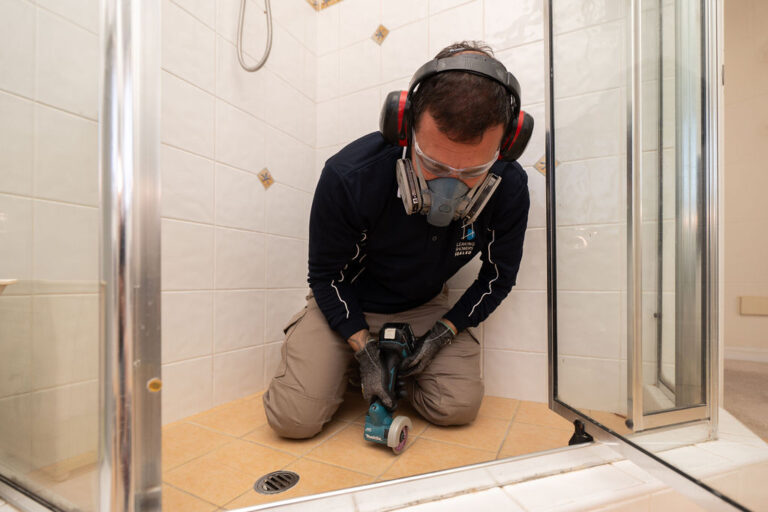
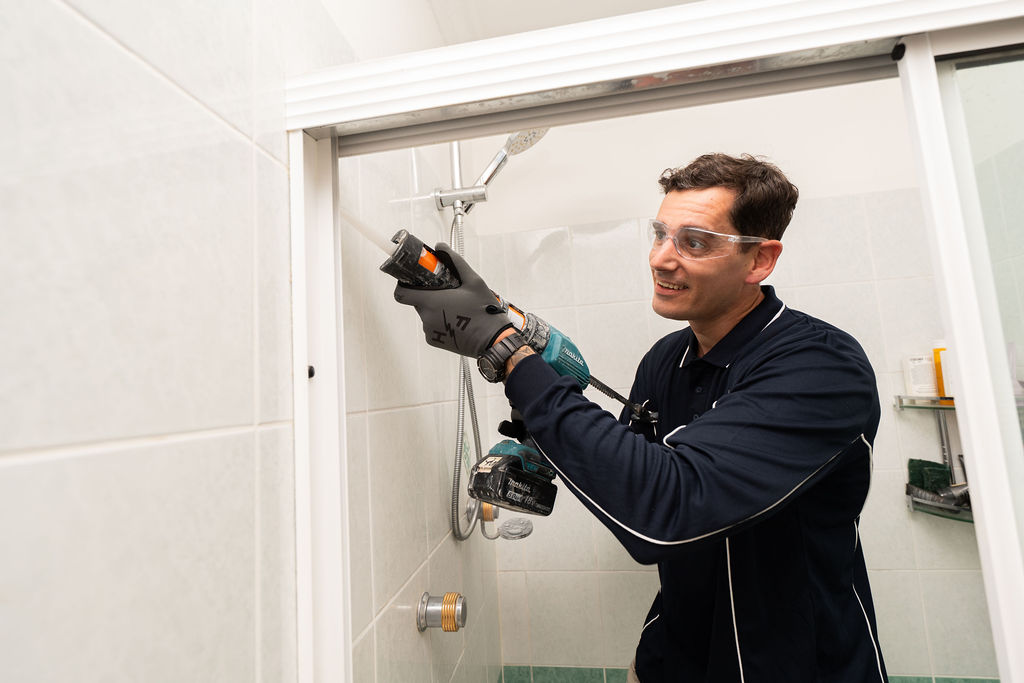
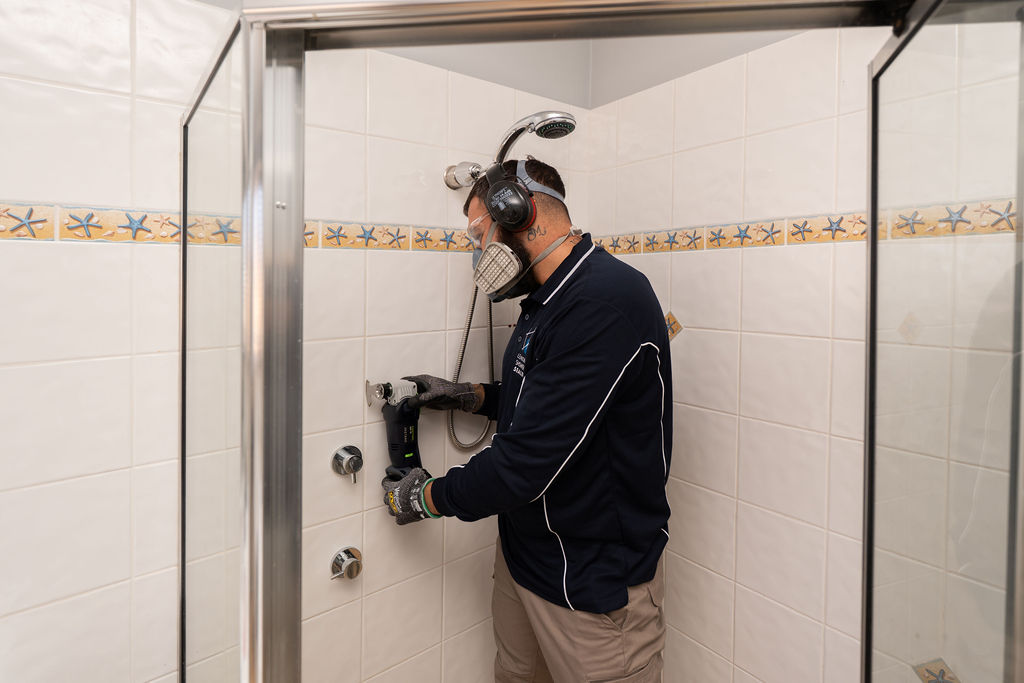
This is the cause behind most of the leaking shower walls we see. For a full shower seal, we remove every wall grout line and the floor grout, regrout with Ardex epoxy grout, reseal the internal corners and junctions with fresh silicone, and seal the tap flanges. The tiles stay where they are. There’s more on the method in how to stop a leaking shower without removing tiles, and on our leaking shower repairs page.
What doesn’t work is a new bead of silicone run over the old one. Silicone won’t stick properly to old silicone, soap residue or mould, so it lifts again and the water keeps going where it was going before. We’ve written more on telling a real shower reseal from a cover-up.
Sealing the surface also looks after the wall behind it. When the grout and silicone fail, water sits against the membrane between showers and can wear it at the corners and joins, which is one reason a leak is worth fixing early. There’s more on what happens when a leak is left in why you should never ignore a leaking shower.

A leaking pipe, drain or tap: a plumber
If the leak is in the pipes, the drain or the taps, a licensed plumber needs to repair it first. We work with plumbers on these, and the shower can be resealed once the plumbing has been fixed.
A failed membrane behind the tiles: a licensed waterproofer and tiler
Behind the tiles there’s normally a waterproof membrane that catches any water getting past the surface. If it has failed, it can only be replaced with the tiles lifted, which is a job for a licensed waterproofer and tiler. Andreas’s licence covers waterproofing as well as bath and shower resealing, so we know the signs of a failed membrane and we’ll tell you before you spend anything on a reseal.
A leaking shower screen: a glazier
If the water is coming from the silicone where the screen meets the tiles, replacing that silicone often helps with a minor leak. If the screen frame itself is leaking, corroded or wasn’t installed properly, it usually needs a glazier or a shower screen specialist. We can arrange to remove the screen as part of a reseal and coordinate a replacement with a glazier.
Mould on the shower grout near a leaking wall
Mould that keeps coming back on the grout and silicone often goes with a leak behind the wall. Bleach and mould sprays clean the surface, but the mould lives in the grout with water trapped behind it, so it grows back. We cut the mouldy grout out and replace it with epoxy grout, which doesn’t soak up water the way cement grout does. The full comparison is in epoxy grout versus cement grout.
Leaks behind the shower wall in rentals and homes for sale
If you’re renting and you notice damp on the wall behind the shower, let your property manager know early, because a small leak at the grout or silicone is far easier to repair before the water has had months to spread. For landlords and property managers, the time between tenants is a good window to regrout, reseal and deep clean the shower while the bathroom is empty.
If you’re an agent getting a home ready for sale, a regrout, reseal and deep clean of the tiles and grout makes the bathroom present better. Because the old grout and silicone are actually replaced, the shower still holds up when a buyer’s building inspector checks it, as long as the leak was at the grout and silicone. There’s more on our page for real estate agents and property managers.
Common questions about a shower leaking behind the wall
Can a leak behind the shower wall be fixed without removing tiles?
Yes, when the water is getting in through the grout and silicone, which is the most common cause. We regrout and reseal with the tiles left in place. If the membrane behind the tiles has failed, the tiles have to come up.
Do plumbers fix leaks behind shower walls?
A plumber fixes a leaking pipe, drain or tap inside the wall. If the water is getting in through the grout and silicone, the repair is a regrout and reseal instead.
How long does it take to fix a shower leaking behind the wall?
A full shower seal takes around 4 to 5 hours on site, and you can use the shower again after 24 hours, once the epoxy grout and silicone have cured.
What warranty comes with the repair?
Our regrout and reseal work comes with a 10 year Ardex product warranty and a 7 year workmanship warranty. The warranty is written on your quote once we’ve seen the shower and know it can be sealed properly.
Book a free quote for a shower leaking behind the wall
If there’s damp on the wall behind your shower, a stain on the ceiling below, or the grout and silicone have gone black, email photos of the floor, the wall and the whole shower, along with the damp patch, to sales@leakingshowerssealed.com.au. We’ll get back to you within 24 hours. You can also call us on 1300 815 512 or contact us to book a free quote. Tell us where the damp is and when it shows up, and we’ll explain whether a shower reseal and regrout is the right repair for your shower.
Leaking Showers Sealed has been regrouting and resealing Sydney showers since 2016. Andreas, who runs the business, holds NSW contractor licence 89111C, and you can check it on the NSW Fair Trading public register. We’re Ardex Academy accredited and have more than 300 Google reviews across our three locations.