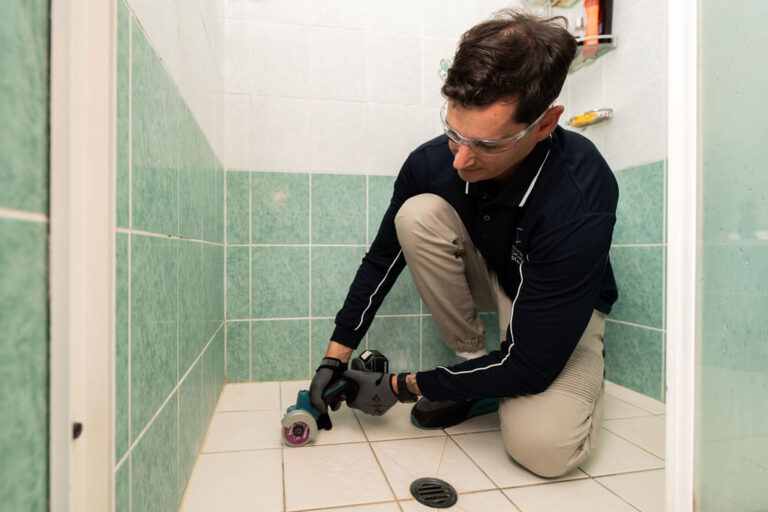
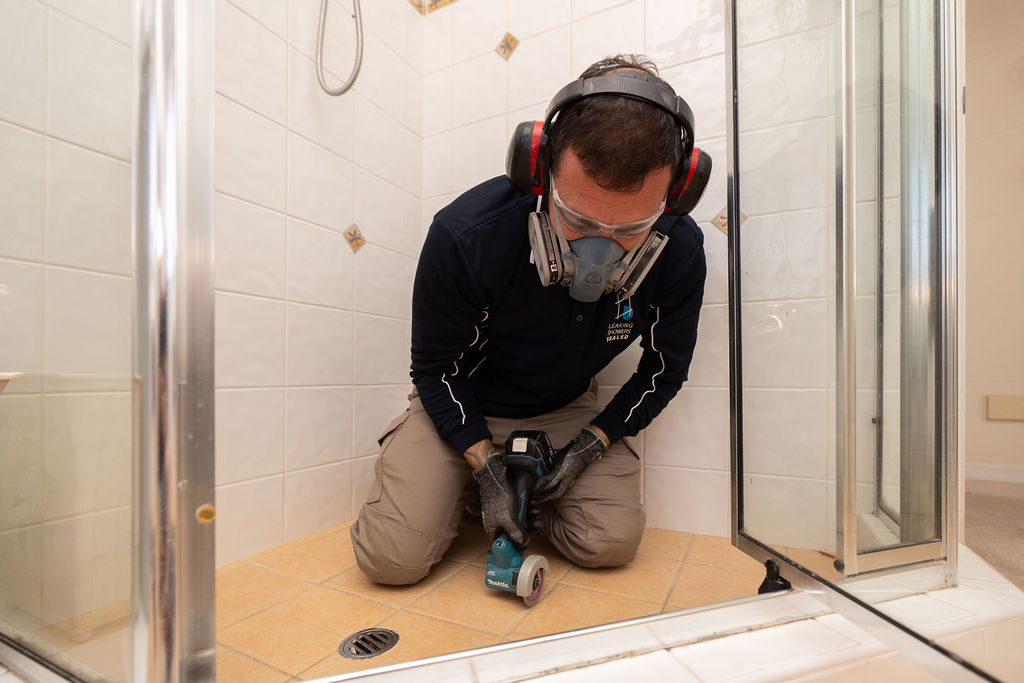
Most leaking shower floors we look at are leaking through the floor grout and the silicone where the floor meets the walls. Regrouting and resealing the shower floor fixes that leak with the tiles left in place, and the walls can stay as they are if their grout is still sound. It won’t fix a leaking pipe or waste, or a membrane that has already failed under the tiles, so it’s worth knowing which one you’ve got before anyone starts work.
Here’s how to tell, and what a shower floor regrout and reseal involves.
Key Takeaways
- The usual cause and the fix: most leaking shower floors we look at leak through the floor grout and the silicone where the floor meets the walls, and a regrout and reseal of the floor stops that leak with the tiles left in place.
- The signs: floor grout that stays dark long after the shower has dried, and grout that is cracked, crumbly or missing, usually point to failed grout and silicone.
- When it needs more: a leaking pipe, waste or tap needs a plumber, and a failed membrane under the tiles means the tiles have to come up, which is work for a licensed waterproofer and a tiler.
- Time on site: a regrout and reseal of the floor, which we call a shower base seal, takes around 3 to 4 hours, and the shower can be used again after 24 hours.
- Warranty: every regrout comes with a 10 year Ardex product warranty and a 7 year workmanship warranty, written on your quote.
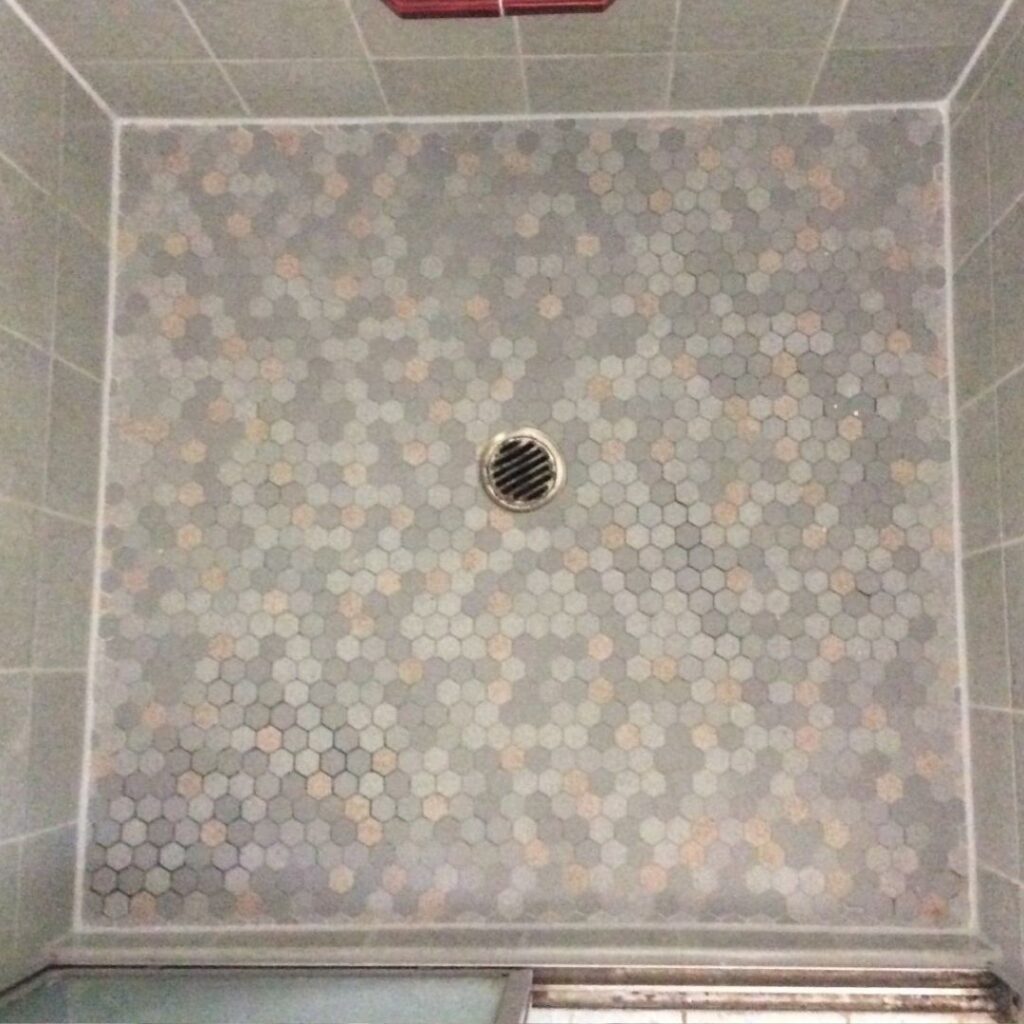
Why shower floors leak through the grout and silicone
Water runs across the shower floor every time someone showers and sits in the grout lines on the way to the waste, and the floor gets walked on and scrubbed every day. Grout is porous, so once it starts to wear, water soaks into it and stays there between showers.
The weakest point is usually the wall to floor junction. It takes a lot of water and moves the most as the house moves, so the silicone there is often the first thing to crack, shrink or pull away from the tile. When that seal goes, water runs behind the bottom row of wall tiles and into the floor, and that is where a lot of leaks start.
Signs your shower floor is leaking through the grout and silicone
These are the signs that usually point to failed grout and silicone on the shower floor:
- Floor grout that stays dark: the grout lines are still dark and damp long after the rest of the shower has dried.
- Cracked, crumbly or missing floor grout: you can see gaps, or the grout comes away when you run a fingernail along it. Small holes in shower grout are an early version of the same problem.
- Black, shrunken or lifting silicone at the bottom of the walls: the seal along the wall to floor junction has gone mouldy, has gaps in it, or is peeling off the tile.
- Damp outside the shower: swollen or stained skirting boards, a soft door frame, or water on the bathroom floor after a shower.
- A musty smell: the bathroom smells damp again soon after it has been cleaned.
- One or two loose floor tiles: a tile that has come away while the rest of the floor feels solid can usually be fixed back in place during the regrout.
If several of these sound familiar, there’s more detail in our post on the signs your shower is leaking.
Can you regrout just the shower floor?
Yes. If the wall grout is still in good condition, we can regrout and reseal the shower floor on its own. We call this a shower base seal. It covers the floor grout, the wall to floor junction and the perimeter of the shower, and it’s often all a leaking shower floor needs.
If the wall grout has also failed, a full shower seal makes more sense. That covers everything in the base seal plus every grout line on the walls, the internal corners and junctions, and the tap flanges. Our post on regrouting a shower to fix leaks explains the full shower version.
Sometimes the floor grout is still sound and only the silicone has failed. In that case a shower reseal of the joints may be enough, and we’ll explain which repair your shower needs once we’ve seen the photos or the shower.
What happens when we regrout and reseal a shower floor
A shower base seal is done with the floor tiles left where they are. This is the order we work in:
- Grinding out the old grout: we remove the grout from the shower floor, the wall to floor junction and the perimeter, back to the edge of the tile.
- Cutting out the old silicone: all of it comes out, because new silicone run over old silicone doesn’t bond and lifts again.
- Cleaning the joints: the empty joints and the tiles are cleaned so the new grout and silicone have a clean surface to bond to.
- Regrouting with epoxy grout: the shower floor is regrouted with Ardex EG15 epoxy grout.
- Resealing the junctions: the wall to floor junction and the perimeter are resealed with Ardex ST neutral cure silicone.
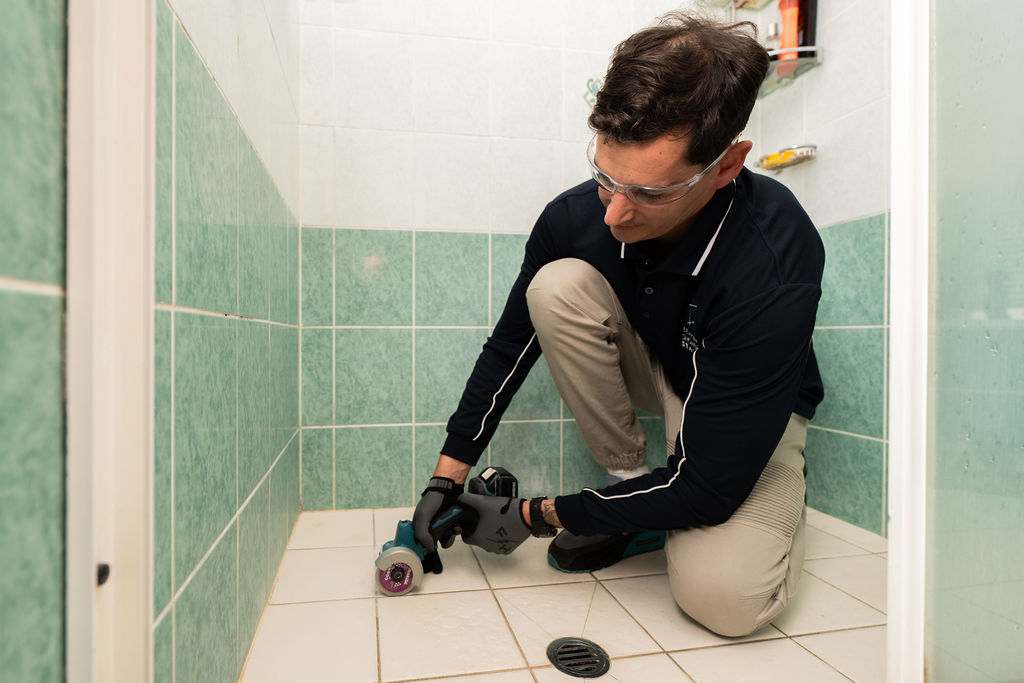
Keeping the floor grout and silicone sealed also looks after the membrane under the tiles. When the surface fails, water sits in the tile bed and against the membrane between showers. A sealed floor means the membrane only has to handle the small amount of moisture it was designed for.
When a leaking shower floor needs more than a regrout
Some leaks don’t come through the grout and silicone at all, and a regrout on its own won’t stop them.
A leaking pipe, waste or tap needs a plumber
Timing is the useful clue. If nobody has used the shower for a few days and the damp patch is still growing, that points to a water pipe in the wall. A leak at the waste is different: it usually only shows after the shower has been used, when water is running down the drain. We work with plumbers when we find damage to pipes, shower drains or taps, and the floor can be regrouted and resealed once the plumbing has been repaired.
A failed membrane under the shower floor
Under the floor tiles there’s normally a waterproof membrane that catches any water that gets past the surface. If the grout and silicone have been redone properly and the damp keeps spreading, the membrane may have failed. A stain on the ceiling under an upstairs bathroom that doesn’t dry out between showers can point the same way. Fixing a membrane means the tiles have to come up, and that is work for a licensed waterproofer and a tiler.
Drummy floor tiles across a wide area
Tap the floor tiles. If a wide area sounds hollow or the tiles move underfoot, the bed under the tiles may be breaking down. Sometimes refixing the tiles and sealing the floor is the right repair. Sometimes the substrate tells us a renovation is coming, and if that’s the case we’ll say so before any work starts.
Why we use epoxy grout on a shower floor
Standard cement grout is porous. On a shower floor it soaks up water every time the shower runs, which is why it goes dark, grows mould and breaks down. Epoxy grout is non-porous, so it doesn’t soak up water the same way.
Bleach and mould sprays clean the surface, but the mould comes back because it lives in the grout with water trapped behind it. Cutting the mouldy grout out and replacing it with epoxy grout takes away the damp it grows in.
What changes the time and the quote for a shower floor regrout
These are the things that change how long a shower floor regrout takes and what goes into the quote:
- Tile size: small mosaics and 100mm tiles have far more grout lines than 300mm or 600mm tiles, so they take longer to grind out and regrout.
- Shower size and layout: a double shower, a niche or extra corners and junctions add work.
- Condition: heavy mould, silicone laid over old silicone, or an earlier repair that has to be fully stripped all take extra time.
- Loose or drummy tiles: tiles that need refixing before the floor is sealed add to the work.
For a starting price, send us photos of the shower floor, the walls and the whole shower. If the membrane is sound and the leak is coming through the floor grout and silicone, a regrout and reseal can make the shower watertight again and give you a couple more years to save up for a renovation. Our article on whether regrouting a shower is a budget renovation compares the two.
Regrouting a shower floor before a sale or between tenants
If you’re a real estate agent getting a home ready for sale, a regrout and reseal of the shower floor, with a deep clean of the tiles and grout, makes the bathroom present better. Because the old grout and silicone are actually replaced, the shower still holds up when a buyer’s inspector checks it.
If you’re a landlord or property manager, the gap between tenants is a good time for a partial bathroom makeover. Our page for real estate agents and property managers has more detail.
Common questions about regrouting a shower floor
How long does it take to regrout a shower floor?
Regrouting and resealing just the floor, which we call a shower base seal, takes around 3 to 4 hours on site. If the walls are done as well, allow around 4 to 5 hours.
How soon can I use the shower after the floor is regrouted?
You’ll need to wait 24 hours before using the shower, which gives the epoxy grout and silicone time to set.
Do you lift the floor tiles to regrout a shower floor?
No. The floor is regrouted and resealed with the tiles left in place. If one or two tiles have come loose, they can usually be fixed back down and regrouted in the same visit.
What warranty comes with a shower floor regrout?
Our regrouts come with a 10 year Ardex product warranty and a 7 year Leaking Showers Sealed workmanship warranty. The warranty is written on your quote once we’ve looked at the shower and know it can be sealed properly.
Book a free quote for your leaking shower floor
If your shower floor is leaking, the floor grout has gone dark, or the silicone at the bottom of the walls has gone black, email photos of the floor, the walls and the whole shower to sales@leakingshowerssealed.com.au. You can also call us on 1300 815 512 or contact us to book a free quote. Tell us what you’ve noticed and where, and we’ll explain whether a shower regrout and reseal is the right repair for your shower floor.
Leaking Showers Sealed has been regrouting and resealing Sydney showers since 2016. Andreas, who runs the business, holds NSW contractor licence 89111C, and you can check it on the NSW Fair Trading public register. We’re Ardex Academy accredited and have more than 300 Google reviews across our three locations.